
Thought Leadership
News
Our latest work

Megan du Toit
AdTech Lead & Solutions Design
ABOUT
As browser restrictions and privacy tools limit third-party tracking, maintaining accurate measurement has become a top priority for digital marketers. Google Tag Gateway (GTG) offers a practical solution by serving Google tags from a brand’s own domain, shifting them into a first-party context to reduce signal loss and protect data integrity. GTG addresses three critical challenges: boosting performance through recovered conversion signals, enabling privacy-compliant data collection, and simplifying setup without a full server-side migration. Implementations can be achieved via one-click CDN, manual CDN, or manual server-side GTM, often within hours rather than weeks. By restoring blocked signals, GTG improves measured conversions, GA4 hits, behavioural insights, attribution accuracy, and incrementality testing. The dentsu analytics team supports brands with readiness assessments, configuration, validation, and guidance to maximise measurement impact. GTG is an efficient, privacy-forward way for advertisers to safeguard their data, strengthen marketing performance, and future-proof measurement in an increasingly complex digital ecosystem.
As browsers continue to restrict third-party tracking, advertisers are under pressure to protect the accuracy of their measurement. Signal loss affects everything from attribution to bidding efficiency, and even small drops in data quality can weaken performance. Google Tag Gateway (GTG) is one of the most practical solutions available right now, giving brands a way to strengthen measurement without a complex rebuild.
This article unpacks what GTG is, why it matters and how you can get started quickly with support from the dentsu team.
What is Google Tag Gateway?
Today, most Google tags are loaded from a third-party domain such as googletagmanager.com. These requests are increasingly blocked by browsers, privacy tools and network filters, which means valuable behavioural signals never reach your analytics or ad platforms.
Google Tag Gateway changes this by allowing you to serve Google scripts from your own domain instead. Instead of calling a third-party location, the tag loads from something like https://yourdomain.com. This shifts the tag into a first-party context, helping it avoid the restrictions placed on third-party requests.
In simple terms, GTG keeps more of your data intact by letting your existing Google tags operate in a safer, more durable environment.

Why do you need it?
Google Tag Gateway was built to address three core challenges facing digital marketers: performance, privacy and operational overhead.
1. Performance uplift
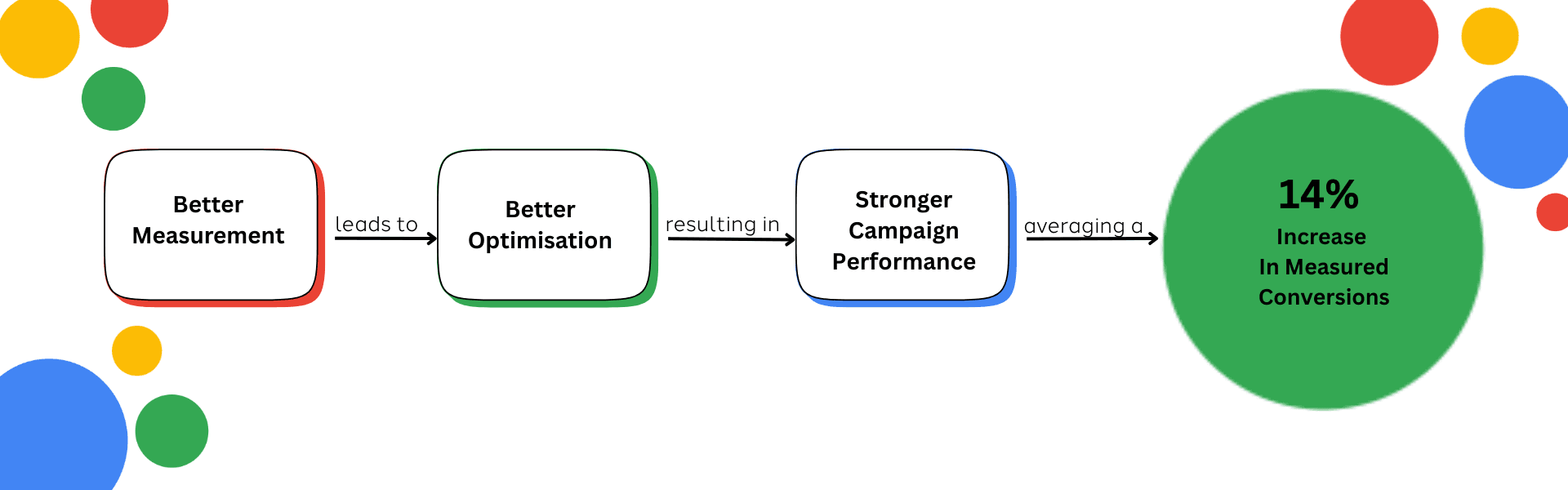
By recovering signals that would otherwise be lost, GTG helps increase measured conversions, improve return on ad spend and feed cleaner data into bidding strategies.
2. Privacy by default
GTG supports a privacy-forward approach by giving you more control over how data is collected and processed. When combined with confidential computing, it adds a secure environment that protects data in use, without requiring changes to your consent experience. Hosting tags within your own architecture strengthens first-party governance and is aligned to global privacy expectations.
3. Simplified setup
Unlike a full server-side tagging migration, GTG is fast to enable. There is no re-tagging required for existing implementations and new tags benefit from automatic configuration. For many advertisers, GTG is the most efficient way to stabilise measurement without months of work.
What does implementation look like?
There are three ways to implement GTG, depending on how your site is structured:
One-click CDN integrations
Manual CDN implementation
Manual server-side GTM (sGTM) implementation
Most implementations take hours rather than weeks, making this one of the quickest ways to strengthen measurement quality. The dentsu team can guide you on this journey.
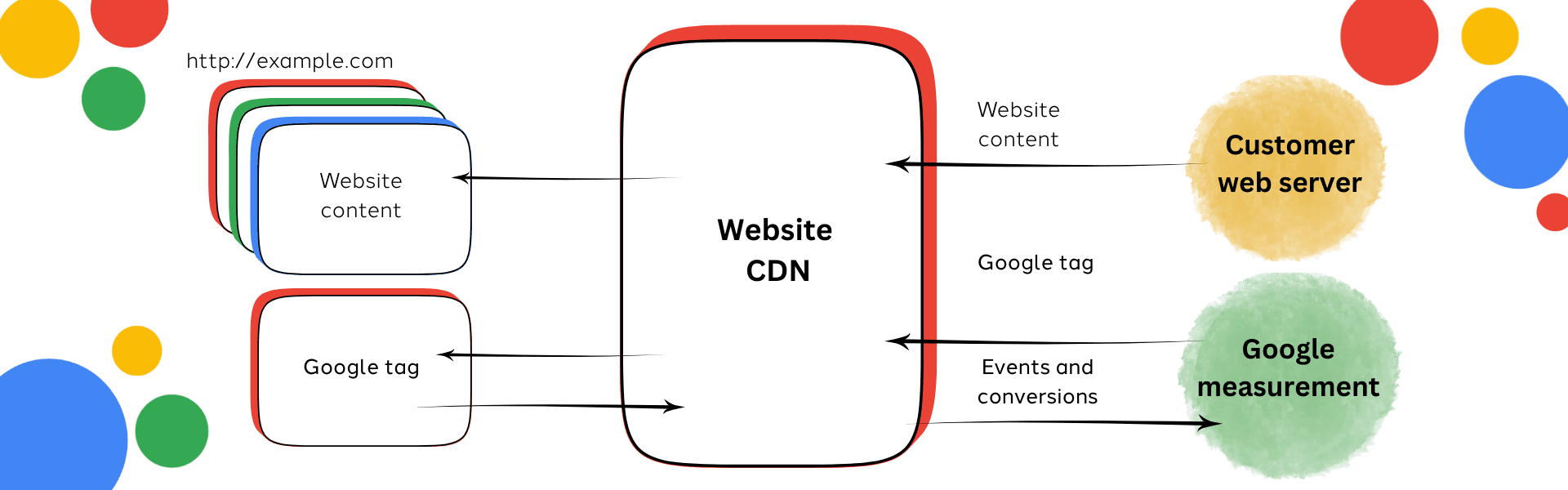
How information flows in Google tag gateway for advertisers:
What impact should you expect?
GTG restores signals that are normally lost when third-party tags are blocked. This leads to:
Higher measured conversions
More GA4 hits and richer behavioural data
Better modelling to fill gaps left by identifier loss
Stronger attribution accuracy and more reliable incrementality testing
Google is already working on a future update that will surface a personalised performance uplift estimate directly in the GA interface, making the impact even easier to understand.
For brands focusing on performance, privacy compliance and long-term measurement resilience, GTG delivers value immediately.
How to get started
The best approach is to assess your current tagging setup and choose the right integration path. This is where dentsu can help.
Our team will:
Review your current tag setup.
Configure and setup Google Tag Gateway
Define a custom path
Activate selected domains
Test and validate
Provide guidance on the measurement improvements you can expect
If you want to safeguard your data, strengthen attribution and future-proof your marketing measurement, now is the right time to adopt Google Tag Gateway.
Reach out to the dentsu analytics team. We will run a readiness check and help you implement GTG smoothly so you can start capturing the value straight away.
RELATED ARTICLES

Retail Media Is Growing Fast. Standards Are Not.
Building Measurement Confidence
Insights
News
Thought Leadership

DENTSU AFRICA PULSE | WEEK OF 25 SEPTEMBER 2026
Signals. Strategy. Growth.
Insights
News

Africa cannot afford another decade of potential
Building Leadership
Insights
News
Thought Leadership
Events

While Others Talk, dentsu Builds Creators
Building Sustainable Influence
News
Our latest work

Ready to grow?
LET'S TALK